
Dispersion Staining, Darkfielduse of darkfield dispersion staining for the analysis of quartz in dust samples. This technique was further refined by R. G Speight in the 1970's by using a more restricked cone of light from the condenser. Match at 589 nanometers wavelength 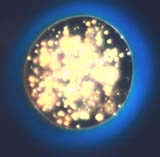
Match at 560 nanometers wavelength, Chrysotile Asbestos Parallel to length 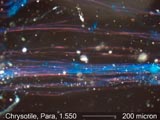
Match at 620 nanometers wavelength, Chrysotile Asbestos Perpendicular to length 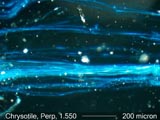
Match at 460 nanometers wavelength, Amosite Asbestos Parallel to Length, Anthophyllite Asbestos Parallel to Length, Tremolite Asbestos Parallel to Length. 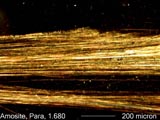
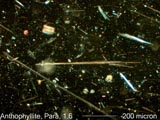
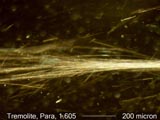
Match at 650 nanometers wavelength, Amosite Asbestos Perpendicular to Length, Anthyophyllite Asbestos Perpendicular to Length, Tremolite Asbestos Perpendicular to Length (660). 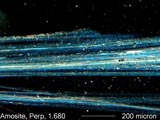
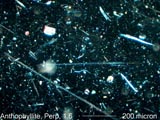
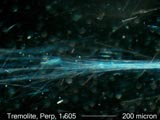
Match at 670 nanometers wavelength; the colors are much more brilliant with the 10X objective. 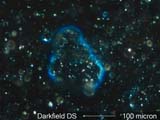
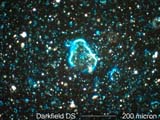
Match at 500 nanometers wavelength 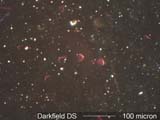
Match at 550 nanometers wavelength; the colors are much more brilliant with the 10X objective. 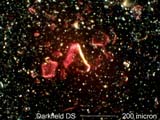
Match at 500 nanometers wavelength; the colors are much more brilliant with the 10X objective. 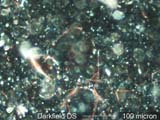
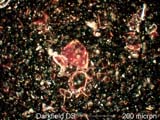
|
