|
Identifying Glass Fiber, Why Polarized Oblique Illumination
Glass fiber can only be accurately identified using a polarized light
microscope and by being aware of the possible
interferences. The images below provide examples demonstrating the
importance of polarized light and natural substances
that can be confused with man-made mineral fiber. It also shows the need for
oblique illumination when assessing
environmental samples. Environmental samples are in a fixed mounting medium.
By using a permanent mounting medium in
the range of 1.49 to 1.51 oblique illumination will quickly separate opaline
materials, phytoliths and sponge spicules,
from glass fiber.
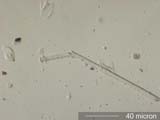
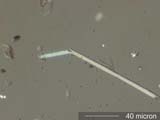
Bird Feather Barbules, Need for Polarized Light
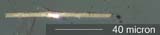
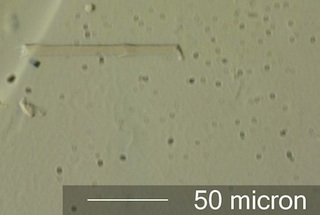
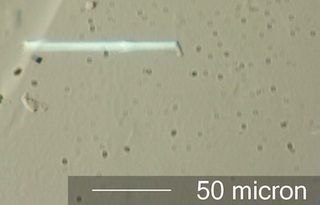
Bird feather barbule fragments are very common in indoor environments. Their
sources include bedding, clothing, birds as pets, and wild
bird debris common in the outdoor environment that enters the indoor
environment as part of the normal air exchange. At a scanning
magnification of about 100X many of these fragments look like glass fibers
if polarized light is not used. With polarized light it is
quickly apearant that the fragments are birefringent and not glass. The
series below show first the image without polarized light and then
with off-crossed circular polarized light.
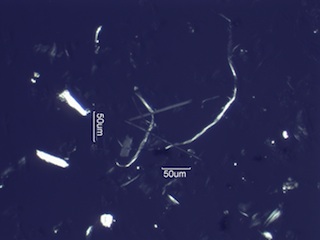
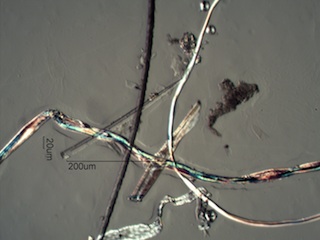
Plastic Fiber
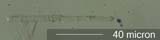
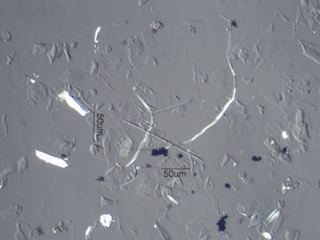
This photograph was taken with off-crossed circular polarized
light. The two vertical fibers on the left of the image are
plastic fibers.
They are birefringent and are brighter than the background,
while the glass fibers are isotropic and about the same
brightness as the background.
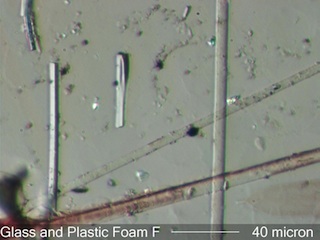
Not all plastic fibers are birefringent. Below is an
example of open-cell plastic foam that can be common in
an office or school environment.
Materials of this type can come from air filters or from
the degradation of foam insoles for footware.
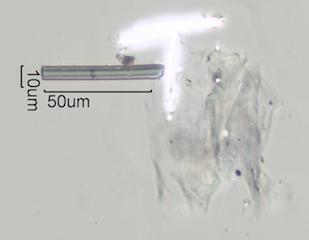
Phytoliths, Need for Oblique
Illumination
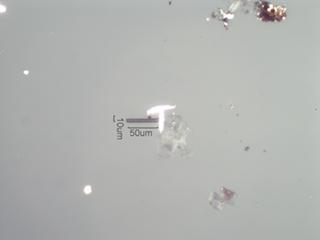
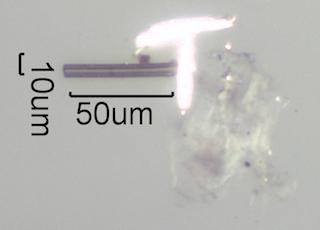
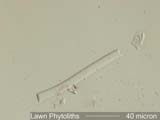
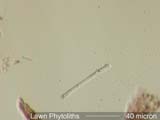
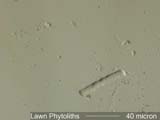
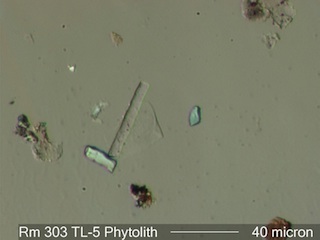
The phytoliths shown here are the opaline
silica phytoliths common in grasses. These
are isotropic but have a lower refractive
index
than man-made glass fiber. All of these
photographs were taken with oblique
illumination and the shadowing on the fibers
show them to be
lower in refractive index than the 1.486
medium they are mounted in. The first few
photographs in this series contains a glass
fiber and a
phytolith. The difference in the shadowing
of a man-made glass fiber and a phytolith in
this mounting medium can be seen here.


Diatoms,
etc., Need
for Oblique
Illumination
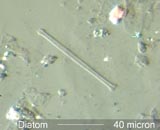
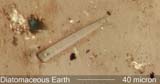
Diatoms generally
have enough
distinct
morphology to
identify them as
other than glass
fiber. However,
diatom
fragments,
radiolaria
fragments,
silicoflagellate
fragments, and
rotifer
fragments can
look like glass
fibers. These
are all opaline
silica and will
have low
refractive
indices.
Sponge
Spicules,
Need for
Oblique
Illumination
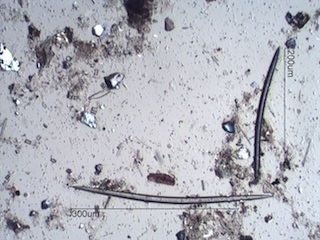
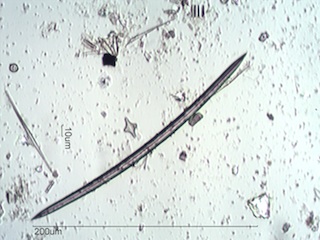
Opaline
silica
sponge
spicules are
another
source of
glass fiber
look-a-likes.
These also
have low
refractive
indices.
This type of
particle is
rare in
indoor
samples but
does occur.
Insect
Hair
(Setae)
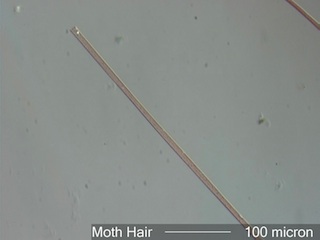
Some
insect
setae
may
be
mistaken
for
glass
fiber
during
a
scan
at
100X.
These
fibers
are
generally
low
in
birefringence
but
their
birefringence
is
evident
if
crossed
polars
are
used.
Oblique
illumination
often
makes
characteristic
morphology
visible
at
100X
so
that
these
particles
can
be
correctly
identified.
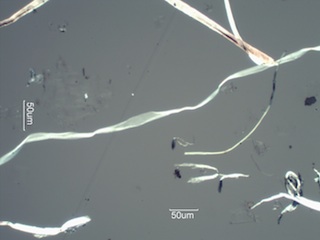
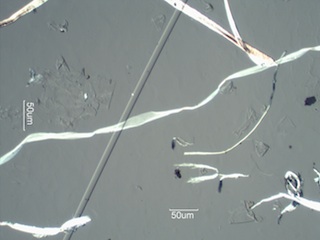
Detection
Problems,
Need
for
Oblique
Illumination
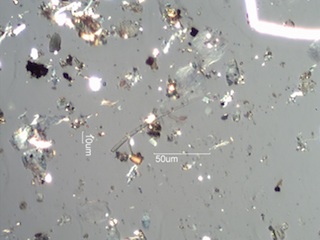
Without
oblique
illumination
glass
fibers
can
be
easily
missed.
To
assess
exposure
in
environmental
settings
large
areas
of
surface
must
be
scanned.
The
only
efficient
way
of
creating
sufficient
contrast
for
rapid
detection
of
glass
fibers
is
to
use
oblique
illumination.
The
photographs
below
illustrate
the
problem.
|