sharing our knowledge.
Photographic gallery.  Thousands of particles under the microscope.

Flake Particles

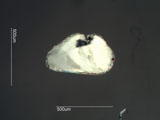
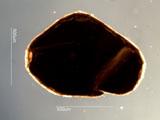
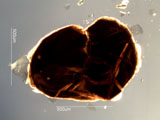
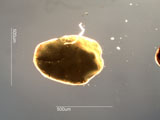
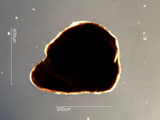
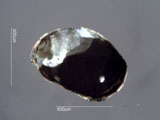
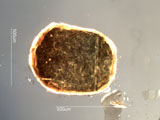
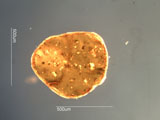
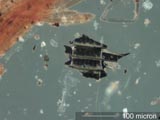
This is part of a guide to the identification of particles seen in samples of free particles. This file includes all particles that may be present as microscopic flakes. Flakes are particles that have a thickness less than one fifth of the other smallest dimension.

Crystal Structure

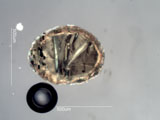
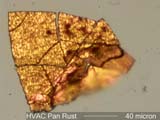
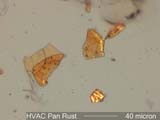
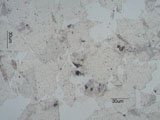
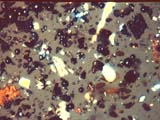
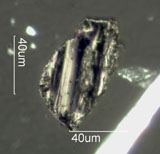
These are particles that are crystalline. The most common particles in this category are the natural sheet silicates, such as the micas. They can be colorless to green, yellow, orange, red, brown, or black. Another common particle in this category is rust.

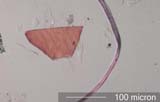
Mica, Palm Desert, California Mica, Palm Desert, California Mica, Palm Desert, California Mica, Palm Desert, California Mica, Palm Desert, California Mica, Palm Desert, California Mica, Palm Desert, California Mica, Palm Desert, California Mica, Palm Desert, California Polycrystalline Rust Flake Isotropic and Polycrystalline Rust Flakes

Isotropic Flakes

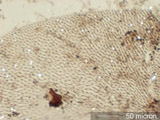
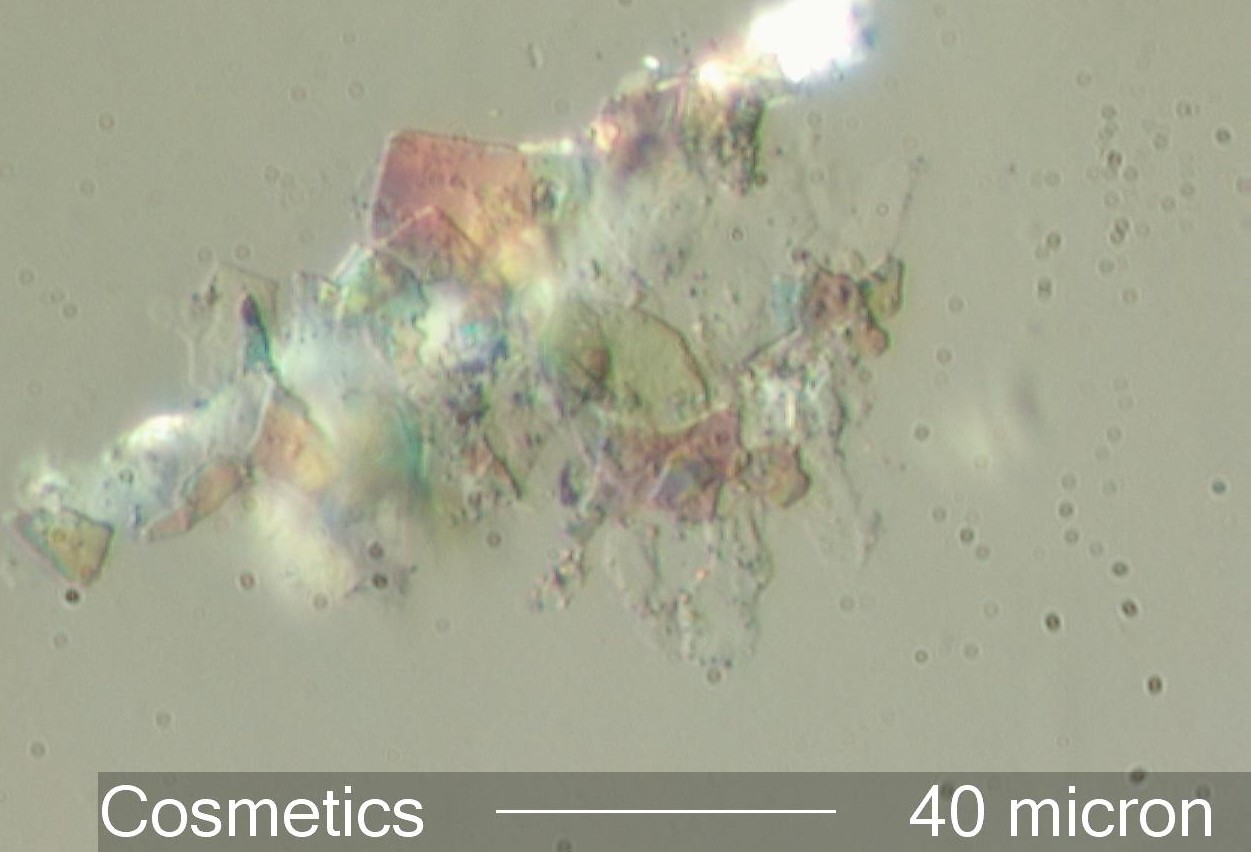
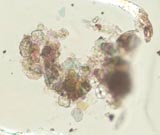
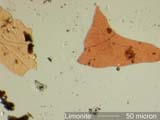
These particles may be any color and may show interference colors as in the case of some cosmetic particles. They may have accessory structures as in the case of fragments of insects.

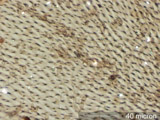
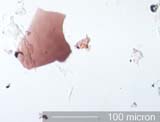
Insect Wing Insect Wing Insect Fragment Insect Fragment Cosmetics Cosmetics Skin Flakes Limonite Isotropic and Polycrystalline Rust Flakes Clay Film from Water Clay Biofilm from Water Body Shop Particles

Opaque Flakes

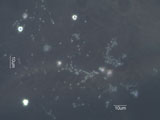
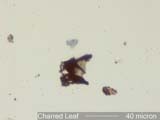
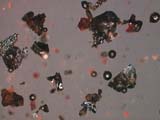
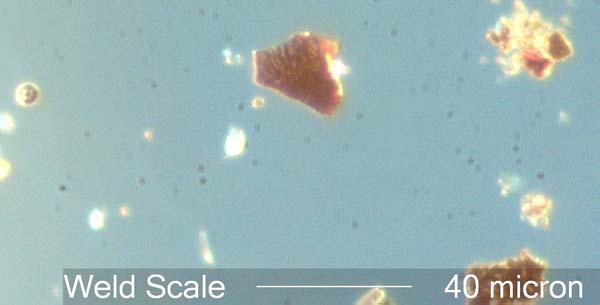
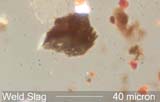
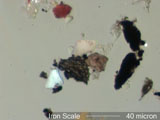
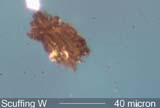
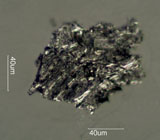
These particles may be a mica (biotite), insect carapace, combustion debris (charred plant material), weld slag, metal film, or metal wear. Reflected light is needed to resolve most of the features that permit identification of the particle.

Mica, Palm Desert, California Charred Wood Charred Leaf Magnetite Sphere Mill Scale and Magnetite Spheres Weld Debris Weld Slag Body Shop Particles Brass Scuffing Wear Scuffing Wear Scuffing Wear Scuffing Wear Scuffing Wear Scuffing Wear